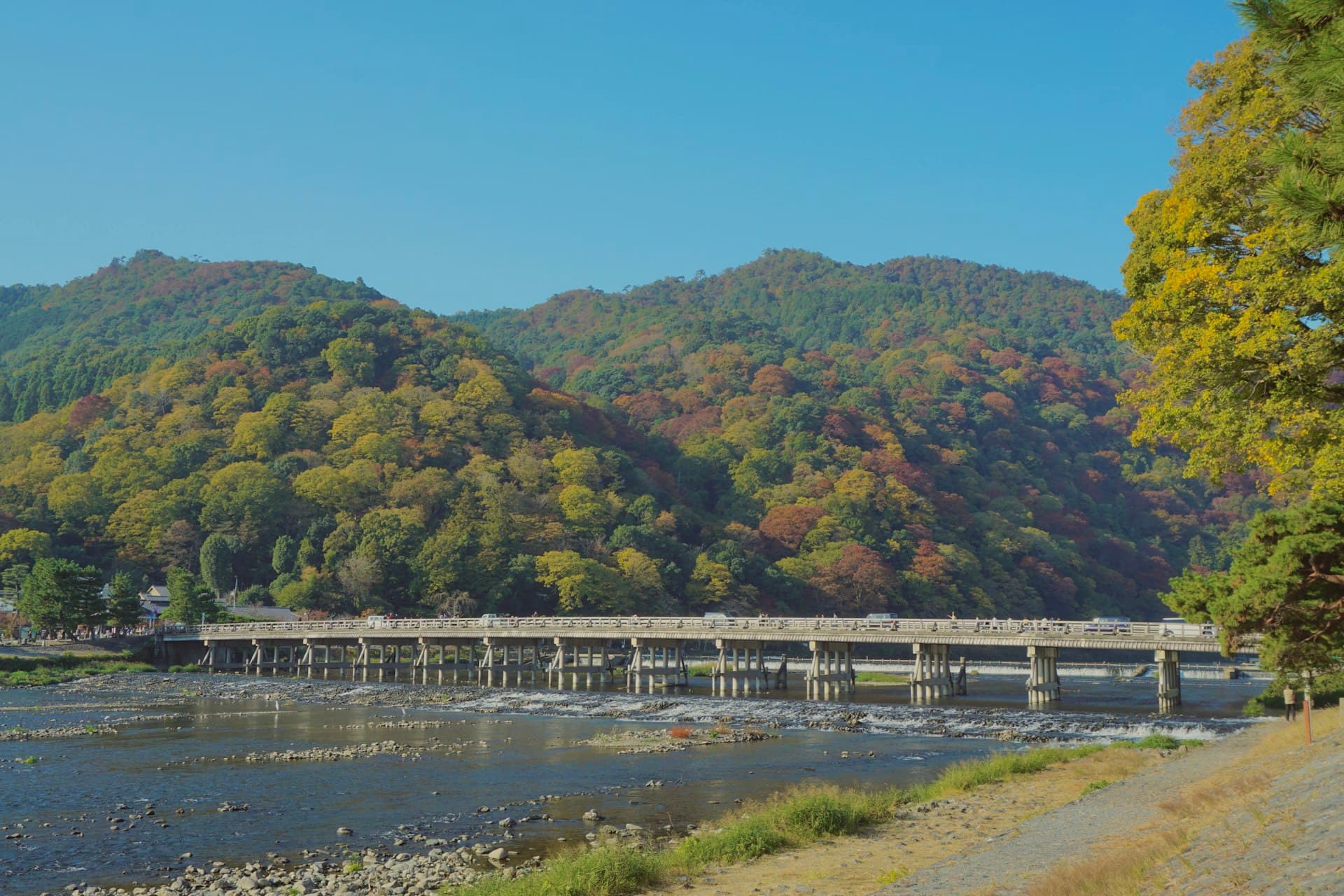
 Photo by Iffah Suhaili on Unsplash
Kaiseki by Tenryu-ji
Kaiseki houses near Tenryū-ji temple and the Katsura river in Arashiyama.
Kaiseki by Tenryū-ji, along the Katsura
Arashiyama in western Kyoto centers on the Katsura river and Togetsukyō bridge. The wooded grounds of Tenryū-ji temple sit on the north bank; Arashiyama Park and Nakanoshima, the small islet midstream, lie just to the south. This article introduces two kaiseki — a multi-course Japanese meal rooted in seasonal ingredients — houses sited within that small radius.
Kyoto Kitcho Arashiyama Honten, in the Tenryū-ji district
Kyoto Kitcho Arashiyama Honten is located in Saga Tenryū-ji Susukinobaba-chō, an address whose name itself derives from Tenryū-ji's monzen-machi — the district that historically grew up at the temple gate. According to the official website, the restaurant serves courses built on cha-kaiseki, the kaiseki style developed within the tradition of the Japanese tea ceremony, in which the meal precedes the bowl of tea to follow. The restaurant has been listed with stars in the Michelin Guide Kyoto·Osaka, per the official site and publicly available media coverage. It is roughly a 6-minute walk from Randen Arashiyama station on the Keifuku line, and about 15 minutes from Hankyū Arashiyama station, with a layout built around private rooms.
Arashiyama Yugetsu, inside Arashiyama Park
Arashiyama Yugetsu sits inside Arashiyama Park on Nakanoshima, the wooded central islet of the Katsura. The address falls in Saga Nakanoshima-chō, reached by crossing Togetsukyō bridge from the north bank. Per publicly available media, the restaurant serves kyō-kaiseki — kaiseki in the Kyoto restaurant tradition — alongside Kyoto-beef shabu-shabu and dishes built on yuba (a delicate skin lifted from the surface of warm soy milk) and tofu, two ingredients long associated with the Saga and Arashiyama area. The tofu used is described in public media as sourced from Morioka Tōfu-ten, a tofu maker based in the same district.
Cha-kaiseki and kyō-kaiseki
Kaiseki originally referred to the simple meal served before a tea gathering. Cha-kaiseki carries that tea-ceremony lineage, in which a small sequence of dishes prepares the guest for the bowl of tea to follow. Kyō-kaiseki descends from the banquet-style kaiseki (written with different characters) that developed in Kyoto's restaurants over the centuries — per publicly available references. In either tradition, the meal arrives as a sequence of small dishes shaped by the season, with the composition and order set by the kitchen. The two houses introduced above, though within a few minutes' walk of each other, sit at different points along that lineage.
Practical notes
- Getting there: Randen Arashiyama, JR Saga-Arashiyama and Hankyū Arashiyama stations are all within walking distance — pick whichever is most convenient from your hotel.
- Time of day: Some kaiseki houses offer lunch courses as well as evening service, but availability varies by restaurant and by season; check each shop's official channel or reservation listing in advance.
- Pairing with the area: A morning at Tenryū-ji's garden, a walk along the Katsura, and the view from Togetsukyō bridge all fit comfortably into a half-day built around either restaurant.
For opening hours and reservation methods, refer to each shop's Google Maps listing for the most current information.