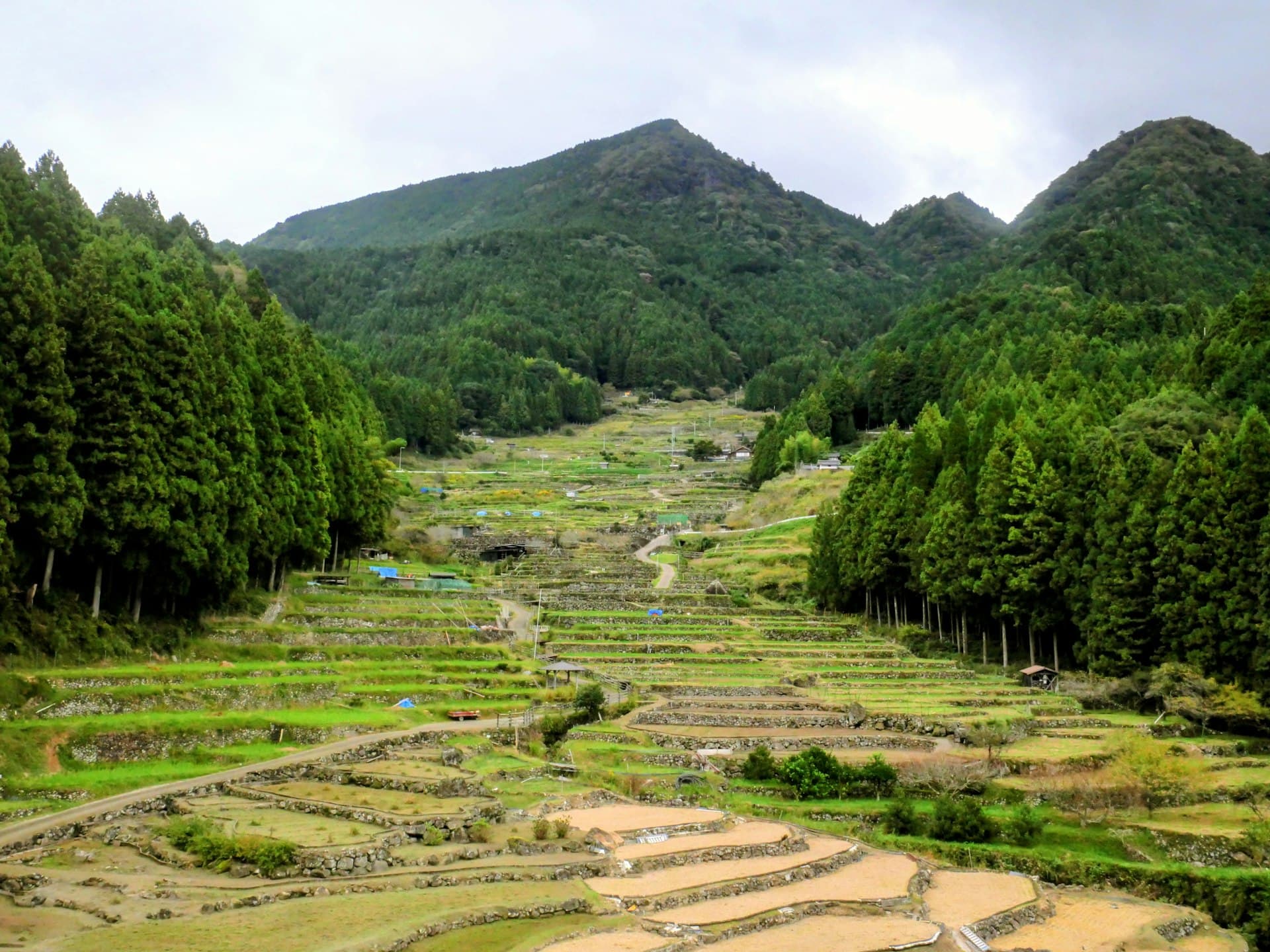
 Photo by Andy Arbeit on Unsplash
Ohara: A Country Table by Sanzen-in
A mountain village north of central Kyoto. By the gates of Sanzen-in temple, two eateries — one serving meals and sweets, one set in a 150-year-old farmhouse.
Ohara sits about an hour north of central Kyoto — a small mountain village home to Sanzen-in and Jakko-in temples, several degrees removed from the polished streets of the city center. This article introduces two eateries near the gates of Sanzen-in — one a teahouse serving both meals and sweets, the other set in a farmhouse over 150 years old.
A Step Beyond Central Kyoto
Ohara lies at the northern edge of Sakyo Ward, in the foothills northwest of Mount Hiei. From Kyoto Station, the Kyoto Bus reaches it in about an hour; from Demachiyanagi, in roughly 45 minutes. The village is best known for its Tendai-school temples — Sanzen-in among them — surrounded by rice fields, mossy gardens and forested slopes.
It is also recognized as a growing area for seasonal vegetables. Cool air, sharp day-night temperature swings, and small-scale farms in the surrounding hills support the produce known locally as Ohara yasai — Ohara vegetables: greens, sansai (wild mountain greens), and root crops grown across the rakuhoku, the northern reaches of Kyoto. Several restaurants along the approach to Sanzen-in build their menus around this regional produce.
Seryo Chaya (At the Gate of Sanzen-in)
Seryo Chaya stands at the entrance to Sanzen-in, a stop for meals and sweets along the temple approach. According to the official information, it is operated as a sister establishment of Seryo, the Ohara-based parent operation, and sits at the start of the temple path.
Its official menu features dango (skewered rice dumplings) and matcha warabimochi — matcha being stone-ground green tea powder, and warabimochi a soft, chilled jelly made from bracken-root starch, often dusted with kinako (roasted soybean flour) — alongside savory bowls such as nishin soba (buckwheat noodles topped with sweet-simmered herring, a classic Kyoto pairing) and curry soba. The restaurant is listed on the official roster of the Ohara Tourism Association, a useful indicator of its place in the local landscape.
Shino Shoumon (Along the Sanzen-in Approach)
Shino Shoumon sits in Ohara Shorin-in-cho, along the same approach road leading to Sanzen-in. According to the official information, the restaurant opened in autumn 2013 inside a farmhouse over 150 years old — a building that, the official site notes, previously housed the Ohara Local Folk Museum.
The signature offering is the Hassai Lunch, a set built around Ohara and rakuhoku seasonal vegetables prepared in eight different small dishes, served with rice and soup. The set is produced by Aji Koubou Shino, a maker of miso and seasonings rooted in the village. Where Seryo Chaya sits at the gate of the temple as a meals-and-sweets stop, Shino Shoumon places the same regional produce inside an older, set-meal setting deeper along the same approach.
Tips for Visiting
From Kyoto Station, Kyoto Bus reaches Ohara in about an hour; from Demachiyanagi Station, the ride is roughly 45 minutes. Pairing one of these meals with a tour of Sanzen-in, Jakko-in, and Hosen-in turns Ohara into an easy half-day trip from the city.
Each season pulls visitors here for a different reason: deep moss greens in early summer, koyo (autumn-leaf color) through November, snow-dusted gardens in winter. From a food perspective, the rotation matters too — spring sansai, early-summer leaves, autumn roots, winter pickles — and timing a visit to one of these moments adds another layer to the trip.
Current hours, closing days, and menu details can be confirmed through each store's Google Maps link.