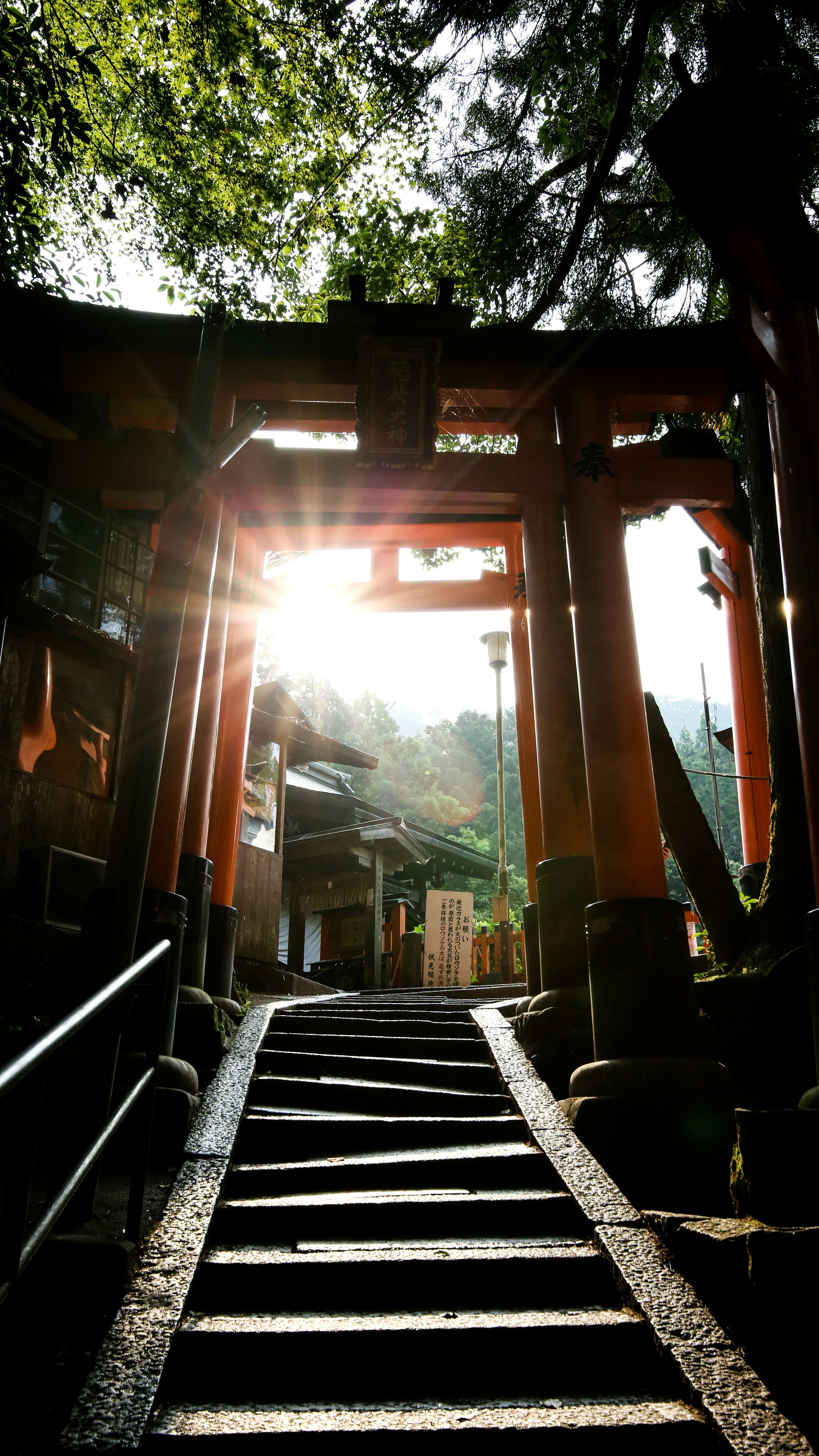
 Photo by Chantal Lim on Unsplash
At the Foot of Fushimi Inari
Foods at the base of Fushimi Inari Taisha — fox-shaped senbei, a long-standing inari-sushi house, the area's sparrow and quail skewers, and coffee by the gates — drawn from public sources.
At the Foot of Fushimi Inari
Fushimi Inari Taisha is known worldwide for its thousands of vermilion torii — the gateways that line the trails winding up Mount Inari. Most visitors come for the gates, but the streets at the base reward a slower pace. A handful of long-standing shops and eateries here serve foods tied directly to the shrine and its imagery.
The shrine is dedicated to Inari, and the fox is Inari's messenger. Foxes are said to favour aburaage — sweet, deep-fried tofu — which is why the area's signature dish is inari sushi, vinegared rice tucked into an aburaage pouch. That fox theme runs through the food here, from rice crackers shaped like a fox's face to skewers of sparrow and quail, a tradition rooted in the district's farming past.
Sōhonke Hōgyokudō (総本家宝玉堂): fox-shaped senbei
Near the approach to the shrine, a short walk from the Inari stations, Hōgyokudō bakes senbei — rice crackers — one at a time over an iron mould. Its kitsune senbei are shaped like a fox's face and made from Kyoto white miso, flour, sugar and sesame. The shop is introduced as an originator of the area's inari senbei, and its bell-shaped suzu senbei hold an omikuji — a paper fortune — inside.
For more of the snacks sold along the approach, see the Fushimi Inari snacks article.
Nezameya (祢ざめ家): inari sushi on the approach
Nezameya stands on the shrine's approach, within walking distance of both the Keihan and JR stations. Local guides describe it as one of the area's oldest eateries, said to date to 1540 and to have been named by the warlord Toyotomi Hideyoshi. Its inari sushi is available to take away, and the menu also includes kitsune udon — wheat noodles in broth, topped with fried tofu — and grilled eel.
Inafuku (稲福): sparrow and quail skewers
A few minutes from JR Inari Station, along the approach, Inafuku is known for grilled skewers of quail (uzura), served year-round, and sparrow (suzume), a seasonal speciality available in the colder months. It also serves inari sushi; according to local guides, the aburaage for it is sourced from a tofu maker in Gion.
Vermillion: coffee for the walk
A short walk from the gates, Vermillion is a specialty coffee bar named after the vermilion colour of the torii. According to the café, its founder spent years in Melbourne before opening here, bringing an Australian-style espresso approach. The menu is noted as vegan- and vegetarian-friendly, with English-speaking staff, and one of its branches sits beside a pond at the foot of the mountain.
Featured stores (4)
See these places on the map
Before you go
The walk to the summit and back takes roughly two to three hours at an easy pace, with plenty of spots to rest along the way. Early morning is the quietest time at the base. One local custom worth knowing: in Japan it is generally considered impolite to eat while walking, so it is best to enjoy your food where you buy it.
For more plant-based options across the city, see the plant-based Kyoto guide. For udon elsewhere, see the Kitano udon article.