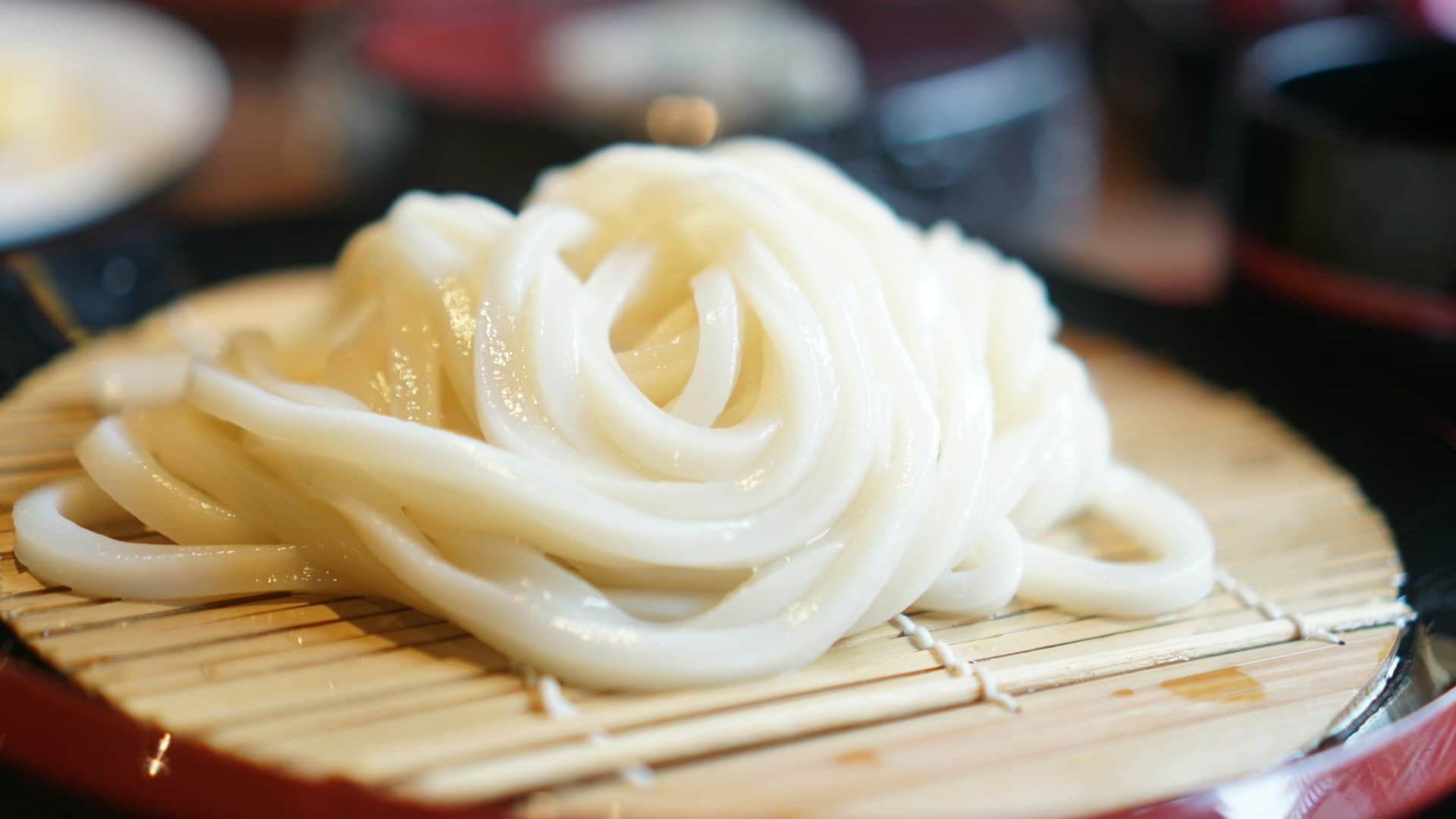
 Photo by ibmoon Kim on Unsplash
Old-school udon in Kitano
Hand-cut noodles locals queue for after the shrine visit.
A bowl after the shrine
Kitano Tenmangu, dedicated to Sugawara no Michizane — the deity of learning — sits in western Kyoto. During exam season the queue stretches long. After the visit, locals reach for one thing for lunch: hand-cut udon.
Kyoto's dashi tradition
Kyoto-style udon is built around kombu and bonito dashi — a clear, light-shōyu broth that doesn't compete with the wheat aroma of the noodles. It's a different beast from the dark eastern shoyu.
Kitsune-udon and Kinugasa-don
The classic order is kitsune-udon: aburaage simmered until sweet-savoury. Some shops are publicly known to pair it with kinugasa-don, a rice bowl of chopped abura-age and Kujō scallions bound with egg.
Get there early
Many of Kitano's old shops open at 11:30 a.m., with a queue forming after noon. Arriving at 11:15 usually gets you straight to a seat.
Seasonal picks
- Winter: nabeyaki-udon, nishin-soba
- Summer: cold bukkake-udon
- Year-round: kitsune, kinugasa-don
Getting there
Get off at the Kitano Tenmangu-mae city bus stop. Several old-school shops are within a 5-minute walk.